
A Low-Flow AIO is an air injection oxidizing filter for private wells that have iron or sulfur, and a well or pump that is on the weaker side. Like our other AIO systems, it treats the water for the whole house without adding chemicals. A pocket of air at the top of the tank oxidizes iron and sulfur, the media below catches what is left, and the system backwashes on its own to clean itself.
This model uses a specialty iron-removal media blend suited to lower-flow homes. The blend is chosen so the filter can still take out iron and odor, while a weaker well can run the system and let it clean itself.
The Low-Flow AIO tank size we show is the one we use most often on weaker wells. If a different size is a better fit, we choose it after a water test.
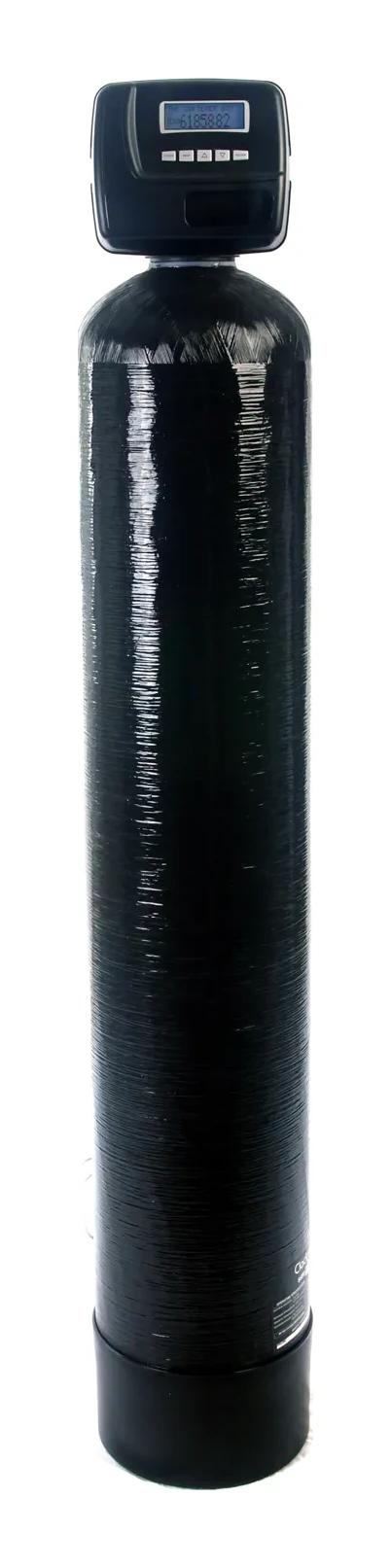
Why choose the Low-Flow AIO
Choose this system when iron stains or a sulfur smell are the problem, but the well or the pump does not deliver as much water as a standard AIO would ask for. A standard system is our everyday choice when the well can support it. The Low-Flow AIO is the one we use when a standard unit would ask more of the well than it can comfortably give.
The free in-home water test includes a look at your well, so we can tell you honestly whether this is the right AIO, or whether a Standard AIO, a Katalox Light AIO, or an ozone generator with the AIO tank is the better fit.
Where it goes, and what it needs
The Low-Flow AIO goes on the main line after the pressure tank and before a softener, so iron and odor are handled first and the softener resin stays cleaner. It needs a drain line, a standard outlet, and water pressure of at least 40 PSI.
How it works with other systems
Most wells that need an AIO also need a softener for hardness. The AIO goes first, then the softener. If the water also needs treatment for bacteria, we talk through injection or UV after the water is already clear. A cartridge filter can be placed ahead of the AIO to catch sand or rust.