
A whole-home catalytic carbon filter takes out chlorine and chloramine taste and smell at every faucet, shower, and appliance. City water around Canton and Stark County is treated with chlorine or chloramine to keep it safe on the way to the house, and that can leave a pool-like taste and smell. A pitcher filter only covers what you drink. This filter treats the water as it comes in.
The carbon filter always goes before the softener, so chlorine never reaches the resin and the resin lasts longer. The tank backwashes on its own, so there are no cartridges to change. We install two sizes: 1.0 and 1.5 cubic feet of catalytic carbon.
Those 1.0 and 1.5 cubic foot tanks are the sizes we use most often. Larger carbon tanks are available for bigger homes, sized after a water test.
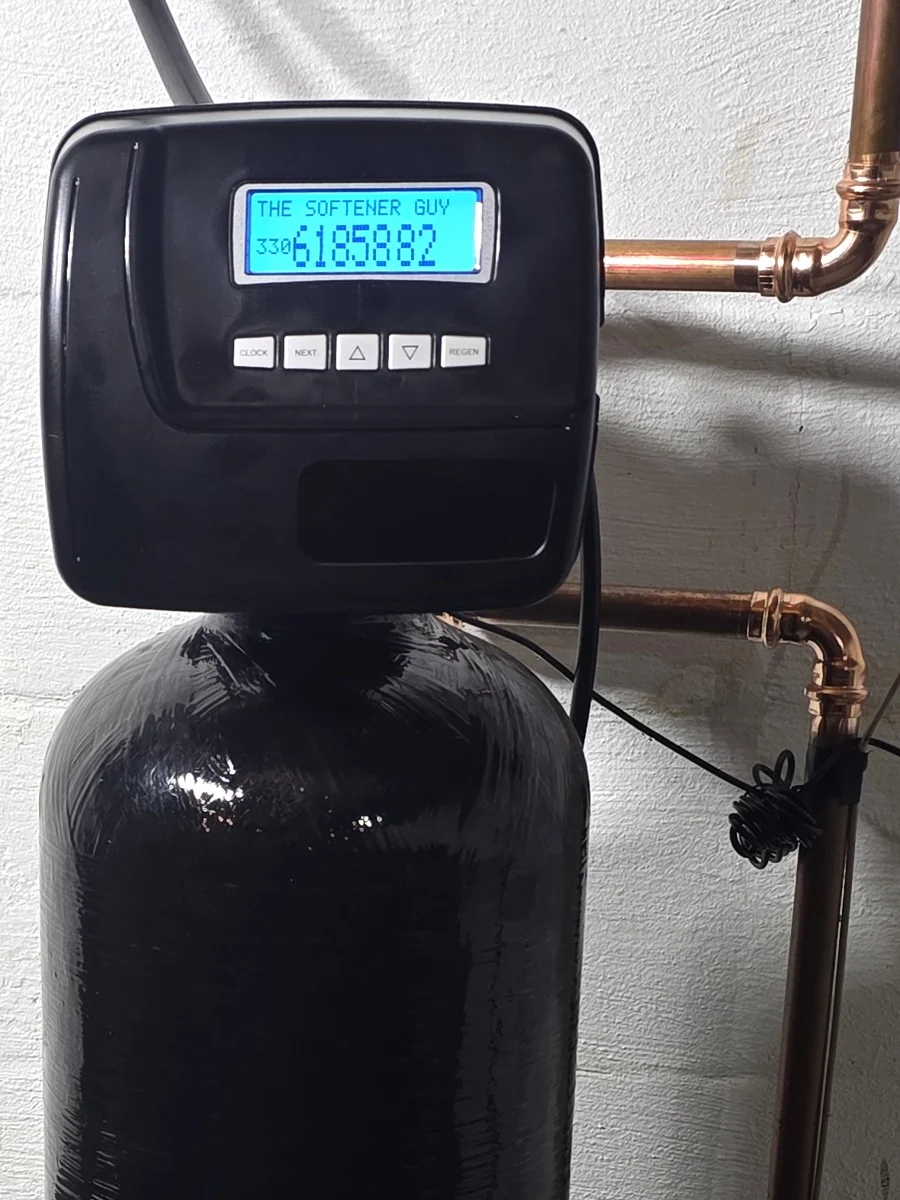
1.0 cubic foot catalytic carbon filter
Same catalytic carbon as the larger size; the difference is how much is in the tank. A 1.0 cubic foot filter is a good fit for smaller homes and lighter water use.
Choose it when you want better taste and smell at every tap, and protection for the softener, in a smaller household.
1.5 cubic foot catalytic carbon filter
A 1.5 cubic foot filter holds more carbon, so it is a better fit for larger households and heavier use. For chlorinated city water, a common pairing is this size ahead of a 48K softener.
Choose it when the house uses more water, or when chlorine taste and smell is a strong complaint and you want the larger bed of carbon.
One tank or a separate carbon filter
A City Water Softener puts resin and a catalytic carbon layer in one tank, which saves space. A separate catalytic carbon tank holds more carbon. We recommend one after the free test. You can read more about how the filter backwashes and what install looks like on our carbon filtration service page.
More about whole-home carbon filtration